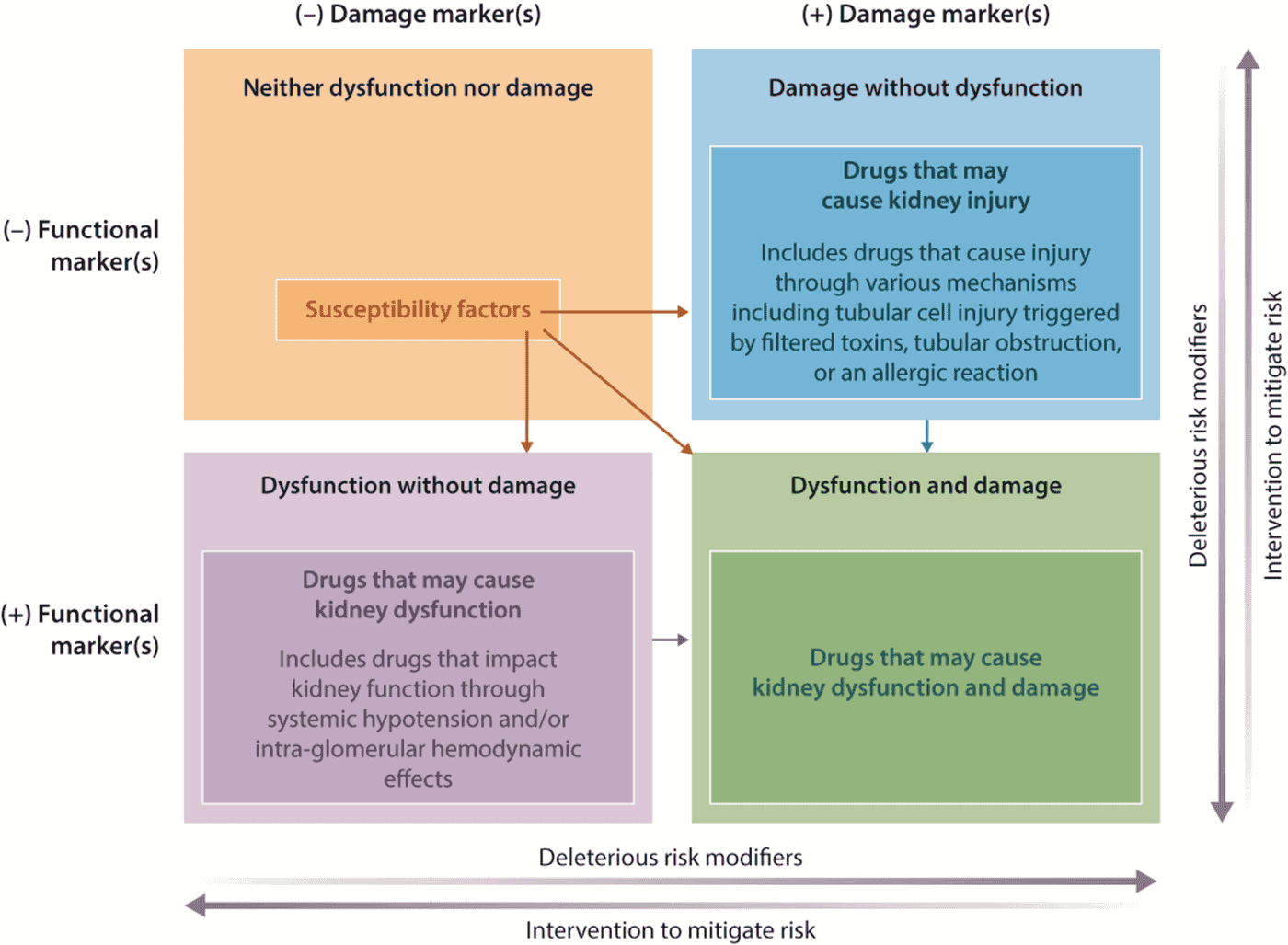
- 藥物 AKI 分四象限(Figure 11):functional ± / damage ± — 不是「有腎毒性 / 沒腎毒性」的二分法。NSAID 屬於 functional + damage 雙陽性最高風險群;ACEi/ARB 屬於 functional ± / damage − 的「dysfunction without damage」群。
- Drug & nephrotoxin stewardship(1C):multimodal approach — 包含藥師主動 medication reconciliation、CDSS、TDM、AKI 期間自動調整劑量。
- CA-AKI 預防 fluid:0.9% NaCl 優於 hypotonic / bicarbonate / no fluid(1B,高 AKI 風險、無 fluid overload、IA contrast)。
- RASi 不要常規暫停:CA-AKI 前(2C)、cardiac surgery 前(2D)、non-cardiac surgery 前(2B)— 三條 anti-routine-hold 建議是 2026 版的重大翻轉。
- Sick day rules(2D):急性疾病脫水時暫停 RASi、SGLT2i、metformin、NSAID、diuretic(Table 40)— 與 2024 KDIGO CKD guideline 一致。
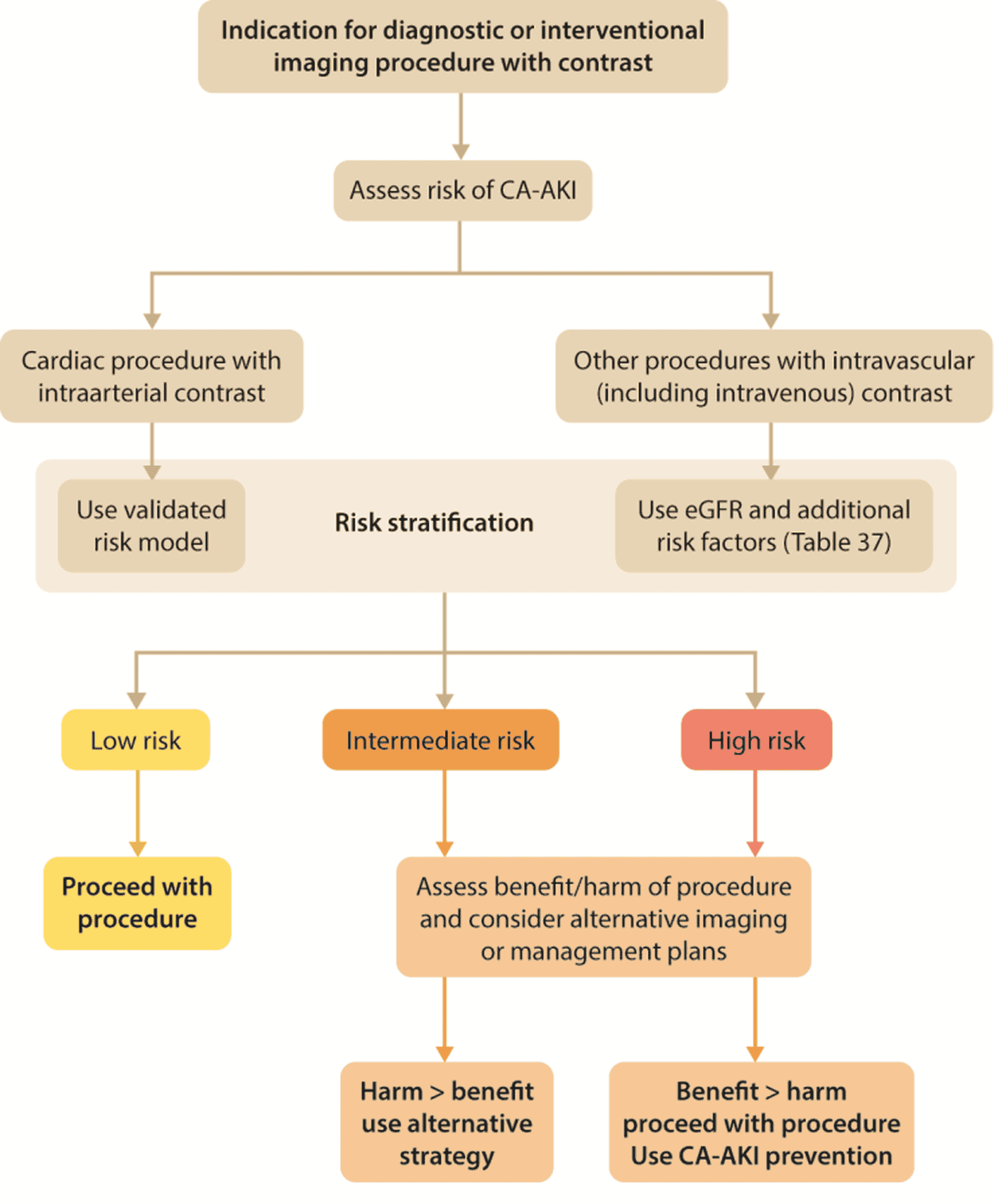
- Figure 12 是 CA-AKI 核心 algorithm:risk stratification → low/intermediate/high → 分流(proceed / re-evaluate / alternative)。
4.1 藥物 AKI 的 4 象限分類 — Figure 11
Practice Point 4.1.1:可能造成 AKI 的藥物應依「暴露時的 kidney function biomarker(dysfunction marker)+ damage biomarker」分四象限(Figure 11)。
來源:KDIGO 2026 Clinical Practice Guideline for AKI and AKD (Public Review Draft, March 2026) — 個人教學使用,原始版權屬 KDIGO。
🧭 圖表逐步解析:Figure 11(藥物 AKI 4 象限)
這張圖在回答什麼問題:所有「腎毒性藥物」是否一樣危險?不是。要根據它們對 functional 與 damage 兩個 axis 的影響來細分,才能對應正確的監測與預防策略。
逐步走完(從左上順時針):
容易踩雷的地方:
- 把 ACEi/ARB 當「腎毒性藥」直接停掉。HF 病人 ACEi/ARB 是 mortality benefit;左下象限的 functional change 是 expected pharmacology,不是腎傷害。停藥的長期 cardiovascular 損失可能 >短期 SCr 改善。
- 把 trimethoprim-sulfa 後 SCr 上升當 AKI。30% 機率是偽性,要驗 cystatin C 或 damage biomarker。除非合併其他 AKI 證據才停。
- 對 NSAID 過度寬容。右下象限是兩個 axis 都中 — 對 dehydrated、HF、CKD、老人特別有害。常規問病人有沒有吃「止痛藥/痠痛藥布」是必要的。
- 抗生素只看 trough 不看 damage biomarker。aminoglycoside / vancomycin 在 trough 正常時仍可能有右上象限的早期 damage — Urine NGAL 可早於 SCr 數天捕捉。
- 不知道 cisplatin / ifosfamide 屬於 +functional / +damage。腫瘤科 nephrotoxic 治療前後的 AKI 預防 bundle(hydration、mannitol forced diuresis、Mg/K supplementation)有實證基礎。
4.2-4.5 Drug & Nephrotoxin Stewardship
Recommendation 4.2.1(1C):對高 AKI 風險或已 AKI 的兒童成人,用 multimodal approach 做 drug & nephrotoxin stewardship。
Multimodal Stewardship 四大要素(Table 28 改寫)
| 要素 | 實務內容 |
|---|---|
| 1. 識別 (Identify) | 高 AKI 風險族群(CKD、HF、老人、ICU)入院時自動標籤;藥師主動 medication reconciliation |
| 2. 介入 (Mitigate) | (a) 停用 nephrotoxin 若可能;(b) 替換為較安全替代藥;(c) 必要時減劑(dose-dependent direct nephrotoxicity) |
| 3. 監測 (Monitor) | TDM(vancomycin、aminoglycoside、calcineurin inhibitor);urine biomarker(NGAL、KIM-1);持續 SCr/UO 追蹤;KeGFR 計算 |
| 4. 系統 (System) | EHR-based CDSS(清楚 action pathway,不是孤立 alert);標準 order set;藥師主導 stewardship round |
關鍵 Practice Points:
- PP 4.2.2 TDM:可能腎毒性藥、腎排泄藥、窄治療窗藥都要 TDM
- PP 4.2.3 DDI 監測:藥物動力學/藥效學的 drug-drug interaction(如 vancomycin + piperacillin-tazobactam 增 AKI 風險、SGLT2i + diuretic 增脫水)
- PP 4.2.4 Crystalluria 預防:高 IV hydration 預防 acyclovir / sulfa / methotrexate / indinavir 結晶
- PP 4.3.1 藥師角色:藥師應做 medication reconciliation、regimen review、stewardship — 不是「附加」而是 stewardship 的核心
- PP 4.3.2 CDSS:要設計成有 action pathway(接合 Recommendation 2.2.1 — alert 不能孤立)
- PP 4.5.1:不要用 creatinine clearance 或 steady-state eGFR 算腎排泄藥的劑量(AKI 是 non-steady state)
- PP 4.5.2:用 SCr 趨勢 + UO 趨勢 + KeGFR 指導劑量
- PP 4.5.4:CRRT 中的劑量調整要看 drug- / patient- / RRT-related factors(Table 34)— effluent flow rate、protein binding、分子量、modality
4.7 CA-AKI(Contrast-Associated AKI)— 心臟科最重要的一節
定義術語:
- CA-AKI(Contrast-Associated AKI)= 顯影劑暴露 48–72h 內發生的 AKI(不論因果)
- CI-AKI(Contrast-Induced AKI)= 證實「因為」顯影劑造成(須排除其他原因)— 過去常混用,現在 KDIGO 用更精準的 CA-AKI
Practice Point 4.7.1:post-contrast AKI 可能有顯影劑以外的原因 — 不要看到 contrast 暴露就直接歸因。常見替代原因:sepsis、heart failure、cholesterol emboli(重要!cath 後常見)、rhabdomyolysis(手術後)、nephrotoxic 抗生素。
4.8 CA-AKI Risk Assessment — Figure 12 完整流程
來源:KDIGO 2026 Clinical Practice Guideline for AKI and AKD (Public Review Draft, March 2026) — 個人教學使用,原始版權屬 KDIGO。
🧭 圖表逐步解析:Figure 12(CA-AKI risk assessment 流程)
這張圖在回答什麼問題:面對一個要做 contrast imaging 的病人,該不該做?怎麼做?怎麼預防?整章 Chapter 4 的決策中樞。
逐步走完:
- Cardiac IA(PCI、cath、TAVI):用 validated risk model(Mehran score、Brown、Tsai 等)
- 其他 IV contrast:用 eGFR + 額外 risk factors(Table 37)— 包含 DM、HF、age、albuminuria 等
- Low risk → 直接做(proceed with procedure)
- Intermediate risk → 評估 benefit/harm,考慮 alternative imaging 或 management plan
- High risk → 同樣 benefit/harm 評估,但分流更嚴格
容易踩雷的地方:
- 把 IA 與 IV 用同一個 risk model:IA(cardiac)的腎傷害機轉與閾值跟 IV(CT)不同 — Mehran score 不能拿去用在 IV CT contrast 病人。
- 把 high risk 當「禁忌」:圖的精髓是 benefit-harm assessment,不是 absolute contraindication。STEMI 病人 eGFR 25 仍應做 primary PCI(benefit>>harm),不該因 CA-AKI 顧慮延遲。
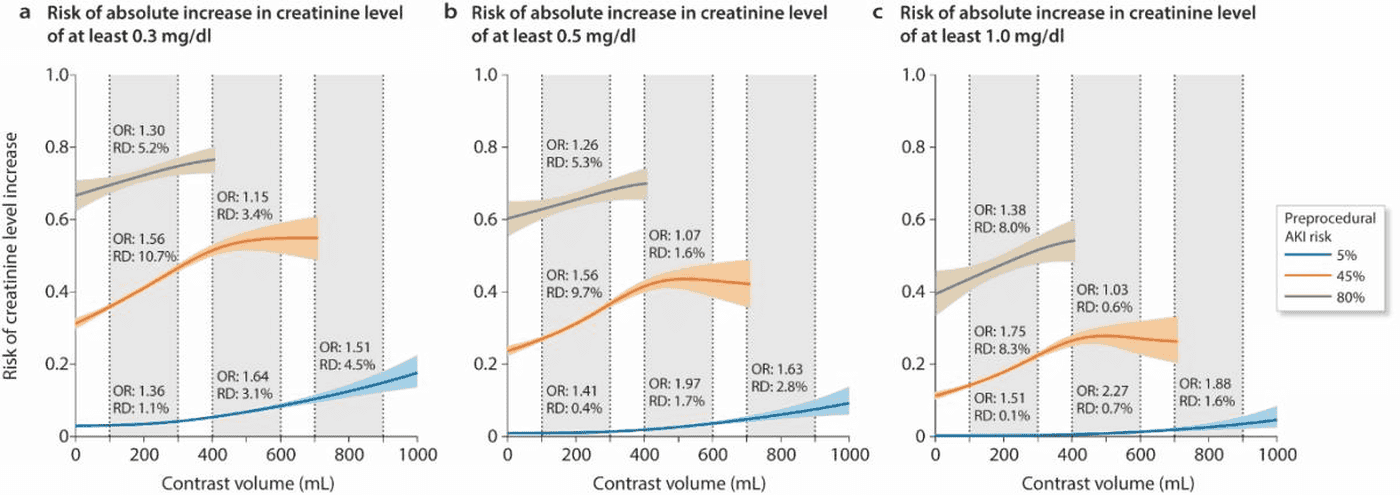
- 低估 contrast volume 的影響:Figure 13 顯示 contrast volume 跟 AKI 風險呈非線性關係 — 即使是 low risk,超過 250 ml 仍可能 AKI。最小化原則永遠成立。
- 常規停 RASi 預防 CA-AKI:2026 反對 — STOP-OR-NOT 等 RCT 顯示常規停沒幫助,反而 HF 病人 RASi gap 期間 decompensation 風險高。
- 強調 N-acetylcysteine、ascorbic acid 預防:2026 明確列為「未證實一致 benefit」 — 不要再開。
- Pre-emptive hemodialysis:明確列為「可能有害」— 不該做。
4.9 CA-AKI Prevention — 流體、藥物、imaging 選擇
Imaging 選擇
- PP 4.9.1.1:weighing risk vs benefit;alternative imaging 用於高風險。但 benefit>risk 時不該延遲 contrast 程序(如 ACS PCI)
- PP 4.9.1.2:高風險者用 iso-osmolar 或 low-osmolar iodinated contrast(high-osmolar contrast 已淘汰)
- PP 4.9.1.3:高風險者用 最小 contrast volume(依下 Figure 13 計算)
來源:KDIGO 2026 Clinical Practice Guideline for AKI and AKD (Public Review Draft, March 2026) — 個人教學使用,原始版權屬 KDIGO。
Figure 13 顯示:相同 contrast volume(如 200 ml)下,pre-procedure AKI risk 80% 群的 AKI 發生風險 ≈ 60%;20% pre-procedure risk 群只 ≈ 15%。contrast volume 越大、pre-procedure risk 越高,AKI 風險呈指數上升。實務上:cath lab 應該追蹤每個 case 的 contrast 用量並定期 audit。
Fluid 策略
Recommendation 4.9.2.1(1B):高 AKI 風險、無 fluid overload、要做 IV iodinated contrast 程序的成人 → 0.9% NaCl peri-procedure 預防性 volume expansion 優於 hypotonic(0.45% saline)、sodium bicarbonate、或 no IV hydration。
關鍵試驗:PRESERVE(NEJM 2018) — 5,177 名病人 randomized to bicarb vs NaCl + N-acetylcysteine vs placebo → bicarb 與 N-acetylcysteine 無優於 NaCl,且 NAC 無效。終結了過去十年的「bicarb + NAC」教條。
標準 NS hydration regimen:
- 1 ml/kg/h × 6–12 h pre-procedure
- 1 ml/kg/h × 6–24 h post-procedure
- (對 LVEF <35% 或 NYHA III-IV 病人減為 0.5 ml/kg/h,並監測 fluid status)
PP 4.9.2.2:no fluid overload 時,給 isotonic crystalloid 預防 CA-AKI 的同時可以 hold diuretic。
RASi 停藥 — 重大翻轉
Recommendation 4.9.3.1(2C):成人 iodinated contrast 程序前不要常規 hold RASi。
關鍵試驗:STOP-OR-NOT(JAMA 2024):2,222 名 elective cardiac surgery 病人 randomized to RASi 停藥 vs 繼續 — 兩組 AKI 與 30-day 結局無差異,但停藥組更多 hypertension。
2024 ESC/EACTS Cardiology guideline 與 KDIGO 2026 立場一致:常規停 RASi 沒幫助;HF 病人停藥反而有 decompensation 風險。
4.10 Major Surgery Peri-operative — RASi 不停
Recommendation 4.10.1(cardiac 2D / non-cardiac 2B):elective major cardiac 或 non-cardiac surgery 成人不要常規 hold RASi 預防 AKI。
關鍵試驗:SPICE-3 與 STOP-OR-NOT — 停藥不降 AKI、可能增加 post-op hypertension 與更多 vasopressor 需求。例外:個別病人 hypotension high risk(major hemorrhage 預期、aortic surgery)可 case-by-case 暫停。
4.11 Sick Day Rules — 急性疾病期的藥物管理
Recommendation 4.11.1(2D):急性疾病引發脫水時,暫停特定藥物類別預防 AKI。
Table 40 改寫 — Sick day 應暫停藥物(成人)
| 藥物類別 | 機轉 | What to do | 何時重啟 |
|---|---|---|---|
| RASi(ACEi、ARB、ARNi) | Efferent arteriole vasodilation → GFR drop 當 hypovolemic | 嚴重嘔吐/腹瀉/減攝食 → 暫停 | 恢復正常進食 24–48h,BP 與 K+ 穩定 |
| SGLT2 inhibitors | Glucosuria + diuresis → 脫水;euglycemic DKA 風險 | 急性疾病、術前 3 天暫停 | 恢復正常進食 + 無 DKA 24h |
| Metformin | Lactic acidosis 風險(AKI 時累積) | 急性疾病或顯影前暫停(eGFR<30 / AKI 時) | SCr 穩定 ≥48h |
| NSAID(含 OTC) | Afferent vasoconstriction | 急性疾病 + 任何時候有 AKI 風險都暫停 | 急性事件解決後 |
| Diuretics(thiazide、loop、MRA) | 進一步 volume depletion | 嚴重脫水時減/停 | volume status 恢復後 |
| GLP-1 RA(部分) | 胃排空慢、嘔吐相關脫水 | 嚴重 GI symptoms 暫停 | GI 症狀解除 |
PP 4.11.1:停藥時必須有明確的重啟計畫,溝通給病人與其他健康照護專業人員,並寫入病歷。不能停了忘記 — HF 病人 RASi 中斷 >1 週就要重新 titration。
- Cath lab 程序前 audit:(a) Pre-procedure Mehran/Brown score;(b) eGFR <60 + DM 或 HF 自動觸發 hydration order set;(c) 不常規停 RASi(除非 BP 不穩或 elective procedure);(d) Contrast volume 上限 = 3.7 × (eGFR / SCr) ml 或 ≤2× CG calculated(依不同公式),記錄並 audit。
- TAVI / Mitra-Clip 等 IA contrast 程序:適用 Figure 12;老年 + advanced CKD 病人考慮 zero-contrast 或 minimal-contrast TAVI(IVUS 引導)。
- CCU 病人的 AKI prevention:(a) 暫停 NSAID(最常被忽略的 cardiology nephrotoxin);(b) 抗生素配對選擇(避免 vanco+pip-tazo 增 AKI),改用 vanco+cefepime;(c) Aminoglycoside 短期單劑量 + NGAL 追蹤 vs 多日療程。
- HF 出院的 Sick day plan:把 Table 40 列入出院衛教 — 病人發燒、嘔吐、腹瀉、減攝食連續 24h 應暫停 SGLT2i + 減 RASi 半量 + 暫停 thiazide;3 天內回診 / 重新評估。
- SGLT2i 啟動後初期 SCr 上升:屬於 Figure 11 左下「dysfunction without damage」象限 — <30% 上升、無 hyperkalemia、albuminuria 沒爆增 → 不停藥。>30% 或合併 hyperkalemia → 評估其他原因(dehydration、其他藥物互動)。
- Peri-cath ACEi/ARB:依新證據不常規停;個別病人若 BP 邊緣 / 預期 fluid loss 大可暫停一次劑量。
- 長期 amiodarone、digoxin、warfarin/DOAC:雖非直接 nephrotoxic,但 KeGFR 變動時要重算劑量 — 用 SCr trend,不要用 single value 算 eGFR。
📋 Chapter 4 關鍵 Recommendations 總表
| # | Recommendation | Grade |
|---|---|---|
| 4.2.1 | Drug & nephrotoxin multimodal stewardship | 1C |
| 4.9.2.1 | 高 CA-AKI 風險、無 fluid overload、IV iodinated contrast → 0.9% NaCl > hypotonic/bicarbonate/no fluid | 1B |
| 4.9.3.1 | 不常規停 RASi 預防 CA-AKI(iodinated contrast procedure) | 2C |
| 4.10.1 | 不常規停 RASi 預防 elective major cardiac / non-cardiac surgery AKI | 2D / 2B |
| 4.11.1 | 急性疾病脫水時暫停特定藥物類別預防 AKI(sick day rules) | 2D |
- Figure 11 四象限:藥物 AKI 不是「有 vs 沒」二分,是 functional ± × damage ± 四象限。
- CA-AKI fluid 用 0.9% NaCl,bicarb 與 NAC 都被打回原形(PRESERVE)。
- RASi 三條「不常規停」:CA-AKI 前、cardiac surgery 前、non-cardiac surgery 前。
- Sick day rules(Table 40):RASi、SGLT2i、metformin、NSAID、diuretic — 急性脫水時暫停 + 明確重啟計畫。
- Multimodal stewardship:藥師為核心,CDSS + TDM + KeGFR 配套。
📖 References(精選)
- KDIGO 2026 AKI/AKD Public Review Draft — Chapter 4.
- Ostermann M, Bellomo R, Burdmann EA, et al. Controversies in acute kidney injury: conclusions from a KDIGO Conference. Kidney Int 2020;98:294–309. PMID: 32709292.
- Weisbord SD, Gallagher M, Jneid H, et al. Outcomes after Angiography with Sodium Bicarbonate and Acetylcysteine (PRESERVE). N Engl J Med 2018;378:603–614. PMID: 29130810.
- Legrand M, Falcone J, Cholley B, et al. Continuation vs Discontinuation of Renin-Angiotensin System Inhibitors Before Major Noncardiac Surgery (STOP-OR-NOT). JAMA 2024;332:970–978. PMID: 39213017.
- Mehran R, Aymong ED, Nikolsky E, et al. A simple risk score for prediction of contrast-induced nephropathy after PCI. J Am Coll Cardiol 2004;44:1393–9. PMID: 15464318.
- KDIGO. KDIGO 2024 Clinical Practice Guideline for the Evaluation and Management of Chronic Kidney Disease — Section 4 (Drug management & sick day rules).
本文以教學為目的整理 KDIGO 2026 AKI/AKD Clinical Practice Guideline(Public Review Draft),所有原文 Figure 之版權屬 KDIGO;商業使用請洽 KDIGO 取得授權。最終版指引發布前,本文內容可能與 final guideline 有差異,臨床決策請以 KDIGO 屆時公告為準。